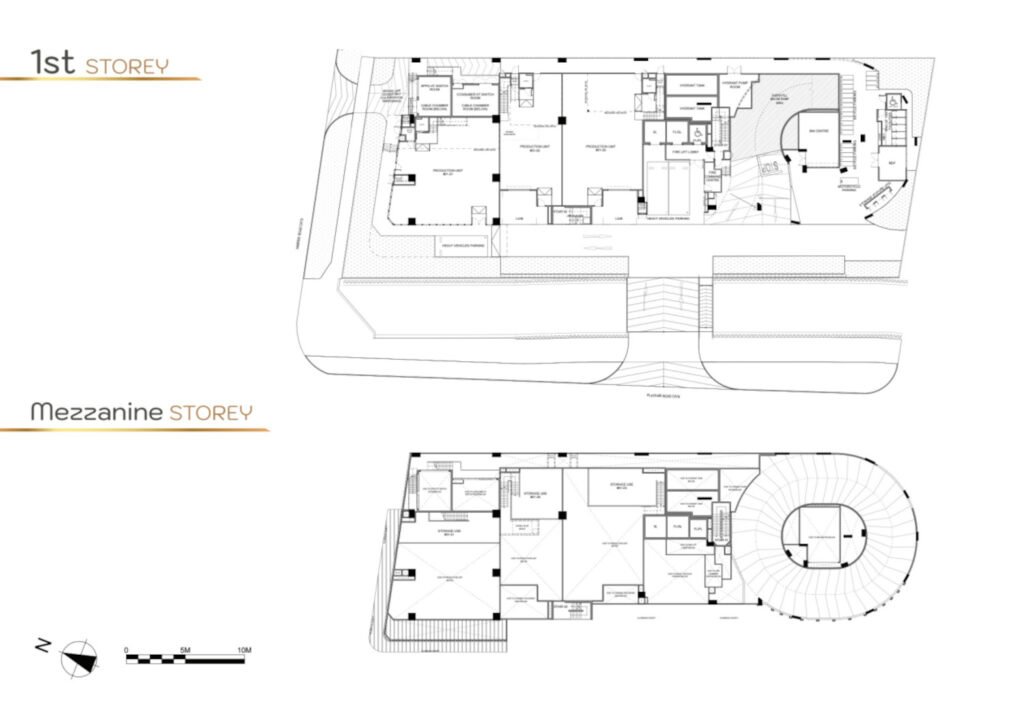
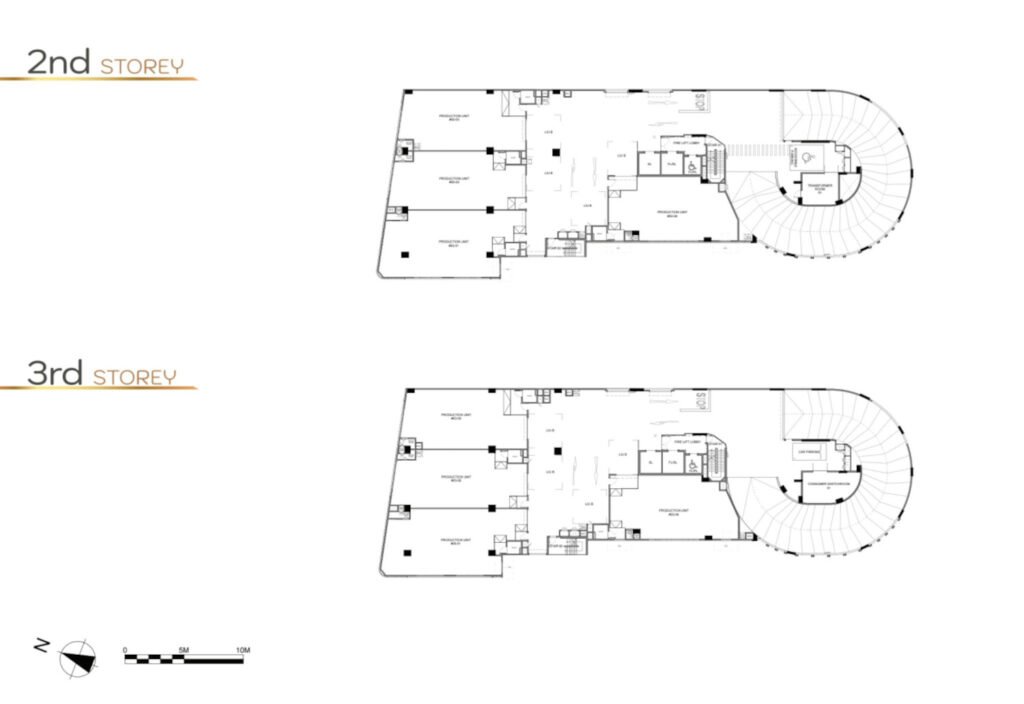
Tai Seng Hub Floor Plan is tailored specifically to ensure the operational needs of food manufacturers, central kitchens, cloud kitchens, food processing companies, bakeries, and cold storage companies. Situated in Tai Seng enclave, Singapore’s central district, Tai Seng Hub is equipped with contemporary modern facilities designed with a practical industrial layout to ensure productive working conditions.
The floor plan focuses on workflow efficiency, food safety, logistics, and future business expansion, unlike conventional industrial buildings. For every unit, a system of planning is in place to maximize production space which meets food industry regulations so that businesses can operate within food industry constraints.
A Floor Plan Build for Operation Efficiency
Tai Seng Hub Floor Plan is best known for its efficient planning of space. The concept provides unit layout flexibility that enables businesses to tailor a production process based on their operational needs. This open-concept design simplifies the arrangement of production lines, storage areas, packing stations, and administrative areas while maintaining a minimum of superfluous structural constraints.
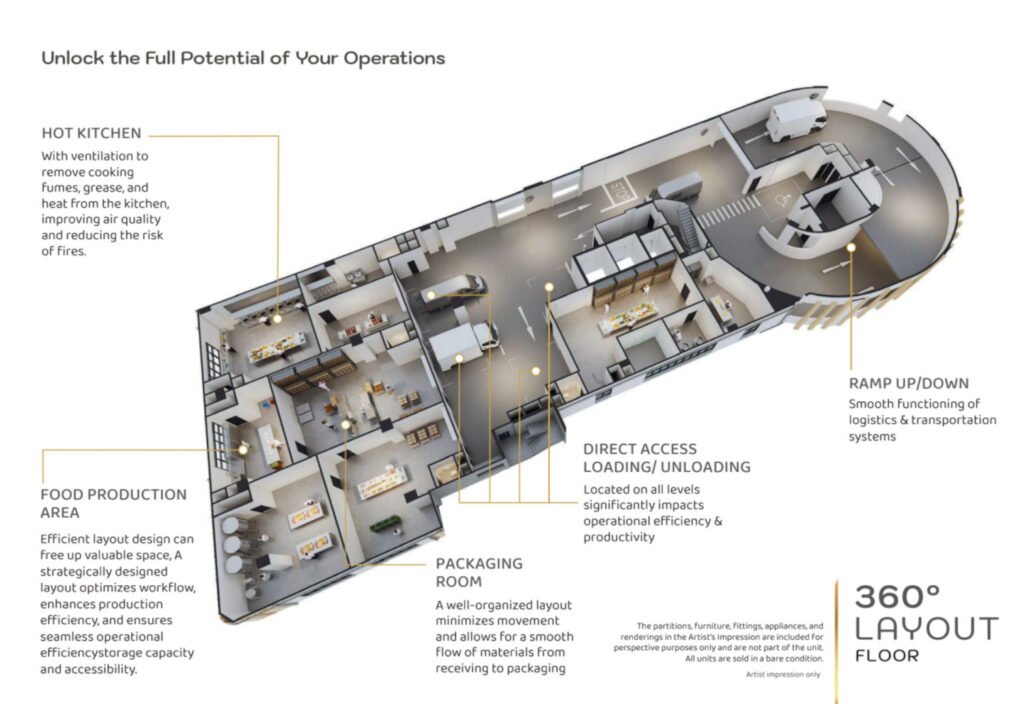
Whether a company works in food preparation, manufacturing, packaging, or distribution, the floor plan provides a nice backdrop for the flow of everyday business. Businesses can also set the layout to aid in the workflow from receiving raw materials, food preparation, cooking, packaging, storage, and dispatch.
Ramp-Up Design for Ease of Logistics
One of the highlights of Tai Seng Hub is its built-in ramp-up design. Vehicles can access multiple levels directly, dramatically increasing loading and unloading efficiency. Delivery trucks can drive closer to single units rather than depending on freight lifts. It decreases handling times and diminishes the demand for manpower to ship ingredients or equipment, and reduces labor needs of transporting finished goods. The easy ramp-up access is particularly beneficial for companies with regular deliveries with improvements in supply chain operations and shorter lead times.
Tai Seng Hub Food Factory has several business-level unit sizes as needed. Startups select compact production spaces, and larger manufacturers may combine nearby units to create larger operational units. Its modular design is conducive to scale without relocation for businesses. The same development allows companies to increase production, facilitating long-term planning with the scaling of operation. Some ground-floor units have mezzanine areas for supplementary office space, storage or meeting rooms, or staff accommodation.
Elevated Ceiling To Improve Productivity
Another important feature is the generous high ceiling of the space. Rising ceilings give better ventilation, allow larger food processing equipment, and provide better working conditions. The vertical space can also allow a business to install specialized machinery, automated production systems, storage racks, and cold rooms where no operational efficiency loss is unavoidable. The approach is applied in a wide range of food production activities such as frozen food manufacturing, commercial baking products and beverages, or meals being prepared and presented to customers.
Integrating Infrastructure for Food Processing
Some of the core features of the Tai Seng Hub are provided in advance to facilitate business setup and regulatory compliance. All production units are equipped with units to help food factories operate:
- Kitchen exhaust duct systems
- Grease traps
- Refuse disposal facilities
- Floor traps
- Water supply connections
- Attached washrooms
- Town gas provisions
- High electrical capacity
Such features enable costs of renovations to be reduced, and allow businesses to enter and operate services sooner than conventional industrial buildings.
Developed for Food Safety Responsibility
Food manufacturers are required to adhere to high hygiene requirements, and the Tai Seng Hub layout backs these standards with detailed planning. The areas in the production zones can be divided into separate zones for raw material handling, food preparation, cooking, packaging, and storage. This not only helps minimize the risk of cross-contamination but allows for efficient cleaning and sanitizing procedures to be carried out. Waste management facilities and proper ventilation facilities such as waste management and grease trap facilities also support in ensuring food safety as required by regulatory bodies.
Food businesses must have temperature-controlled storage for many food establishments. Tai Seng Hub enables the creation of cold rooms and freezer facilities in single units. This allows for flexibility especially for companies that handle frozen products, seafood, meat processing, dairy products, ready-to-eat meals, and fresh produce. The spacious layout prevents the integration of cold storage facilities from impacting the continuous production flow.
Spacious layout helps reduce wasted space, while businesses are free to organize their resources based on lean manufacturing principles. Companies can create separate sections of the unit designated for production,quality control, inventory storage, packaging, office administration,and employee facilities.
This use of facilities benefits operational safety, facilitates greater movement of personnel and optimizes production output.
For Different Food Businesses
The flexible floor plan accommodates a variety of different types of food-related industries, such as:
- Central kitchens
- Cloud kitchens
- Catering companies
- Food processing plants
- Commercial bakeries
- Beverage manufacturers
- Frozen food producers
- Meal preparation companies
- Food packaging businesses
- Wholesale food distributors
Tai Seng Hub Floor Plan
Tai Seng Hub Floor Plan is tailored specifically to ensure the operational needs of food manufacturers, central kitchens, cloud kitchens, food processing companies, bakeries, and cold storage companies.
Product SKU: Tai Seng Hub Floor Plan
Product Brand: Tai Seng Hub
Product Currency: SGD
Product Price: 3200000
Product In-Stock: InStock
5